Part of Things To Do, our guides to parks, lakes, trails, camping, museums and clubs in the White Mountains.
The Forest Service names elk, deer, black bears and skunks as common visitors at White Mountains campgrounds, and the Mexican gray wolf, Apache trout and bald eagle are all part of the local picture. This guide sticks to what agencies say, and lists what we could not confirm.
Checked · Edited by Sam Ridley · Sources · How we check
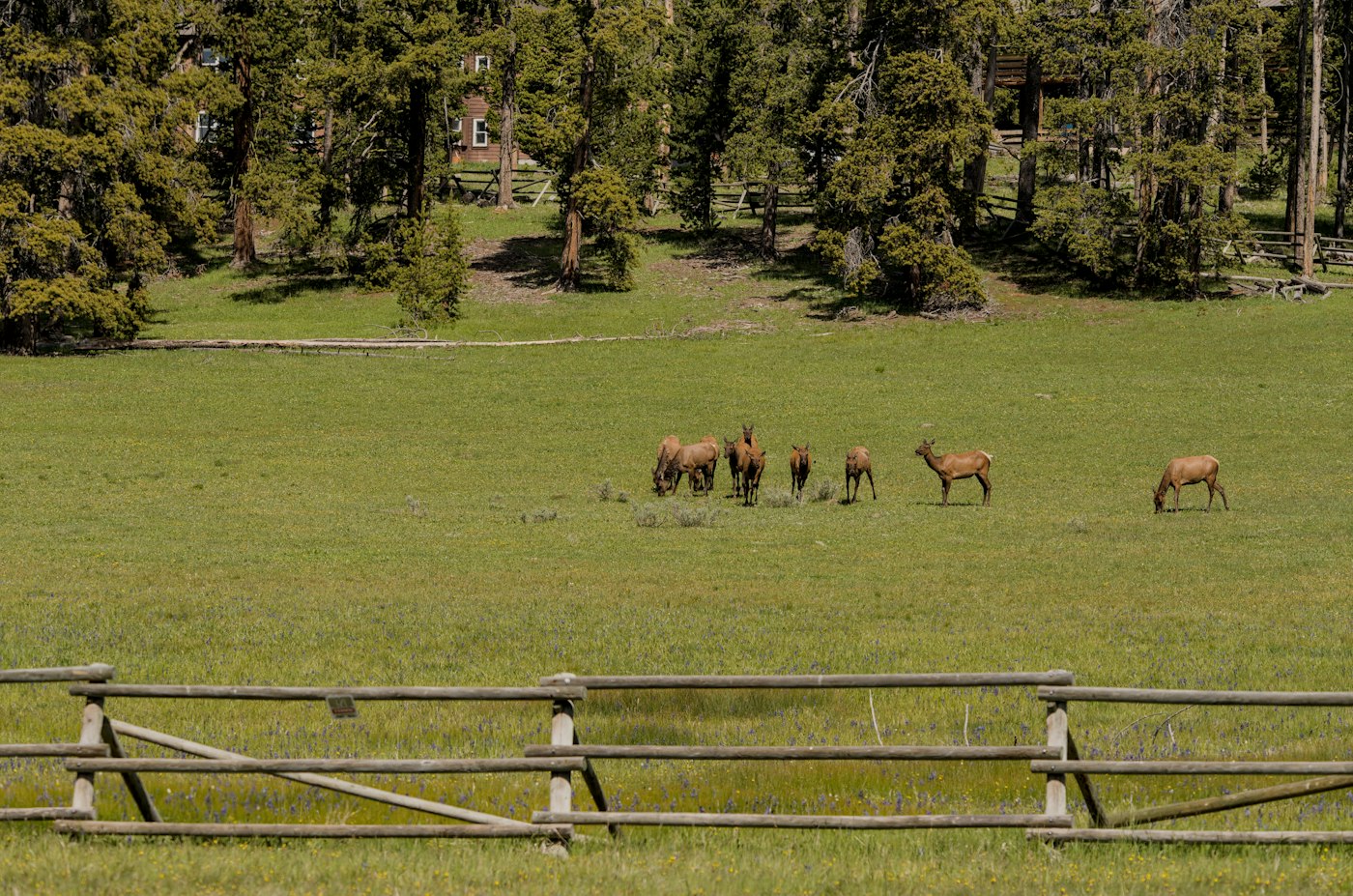
Animals You Might See
Where and when come from the source in the last column; “might” is deliberate, because wild animals keep no schedule. Information as of October 23, 2026.
| Animal | Where and when, per the source | Safety note | Source |
|---|---|---|---|
| Elk | The Forest Service lists deer and elk as common visitors at Aspen Campground and says wildlife viewing there includes elk. Elk also use cliffrose as winter browse. | Keep well back and never approach. We found no Forest Service distance rule for this area. | Forest Service: Aspen Campground |
| Mule deer | Common campground visitors at Aspen Campground; cliffrose is important winter browse for deer. | Do not feed or touch; keep dogs leashed. | Forest Service: Aspen Campground; Forest Service: cliffrose |
| Pronghorn | State planners describe the White Mountains Grasslands Wildlife Area, near Springerville and Eagar, as winter range and fawning habitat for pronghorn. | Watch from the road and do not walk toward herds. | AZ Game and Fish: grassland wildlife area |
| Black bear | Bears are called common campground visitors at Aspen Campground and “relatively plentiful” along the Black River Trail, per the Forest Service. | Store food securely, never feed, never run, and do not play dead if attacked (National Park Service guidance). | Forest Service: Black River Trail; National Park Service: bear safety |
| Mexican gray wolf | Reintroduced in a recovery area covering parts of Arizona and New Mexico, including the Apache-Sitgreaves, since 1998. Counts are minimums, not sightings. | Report sightings to the wolf offices (see safety section). We found no official wolf safety advice for visitors. | US Fish and Wildlife Service; Recovery program update |
| Apache trout | Arizona’s state fish lives only in cold White Mountains streams, usually above 6,900 ft; the Forest Service says Fish Creek holds a pure population. | Threatened species: follow current fishing rules and read the signs on each stream. | US Fish and Wildlife Service; Forest Service: Fish Creek Trail |
| Bald eagle | Single birds and small groups are found on the national forests from fall through spring, hunting at reservoirs and larger rivers. | Breeding disturbance runs January through mid-August; obey posted eagle closures. | Forest Service eagle report |
| Golden eagle | Most often seen in fall, winter and spring, feeding on carrion, per the Forest Service. | Slow down for carrion on highways; eagles are hit by vehicles. | Forest Service eagle report |
| Abert’s squirrel | Lives almost entirely in ponderosa pine forest, which is most extensive between 5,500 and 8,500 ft in Arizona; it eats pine seeds and, November to April, twig bark. | Wild rodents can carry disease; do not feed or handle. | Forest Service: Fire Effects Information System |
| Raptors in a show | The White Mountain Nature Center flies a red-tailed hawk, aplomado falcon, bald eagle, turkey vulture, eagle-owls and a crow. Shows run Wednesday to Saturday October to April, Tuesday to Saturday May to September. | The center is not a wildlife rehabilitation group. | White Mountain Nature Center |
Where to Watch
The agencies we read did not publish a viewing-spot list for most of these animals, so we only point to places that have a page on this site or an official statement.
- Raptors up close: the White Mountain Nature Center in Lakeside has a free-flight raptor show and outdoor trails.
- Lakes and streams: eagles are found at reservoirs from fall through spring. See Lakes, Streams and Fishing, Fool Hollow Lake (Arizona State Parks says the park offers “wildlife viewing opportunities” but names no species) and Big Lake.
- Forest campgrounds and trails: Aspen Campground and the Black River Trail are the named places where the Forest Service mentions deer, elk and bears.
- Grasslands near Springerville and Eagar: the state describes pronghorn winter range there. See Springerville, Eagar and Greer.
- Fort Apache Reservation: wildlife and fishing rules are the White Mountain Apache Tribe’s to set. See our Whiteriver, Hon-Dah and Sunrise guide and the Tribe’s own site.
Staying Safe Around Wildlife
- Do not feed wildlife. The National Park Service says feeding bears, even by accident, teaches them to seek out people. Store food and trash securely. Whether a state or county feeding ban applies here is listed under what we could not verify.
- Bears: make noise, stay calm, talk in a low voice, back away slowly, do not run or climb a tree, leave the bear an escape route. If one attacks, fight back; the Park Service says do not play dead. Bear pepper spray must be a product made for bears (National Park Service).
- Elk and deer: keep far back, especially with young animals or in the fall breeding season, and never approach for a photo. We did not find a Forest Service distance rule for this area.
- Wolves: report sightings to the Alpine wolf office, (928) 339-4329, the Pinetop wolf office, (928) 532-2391, or toll free (888) 459-9653. On the Fort Apache Reservation call the Tribe’s wolf office in Whiteriver, (928) 338-4385 ext. 226. Report harassment or illegal killing of wolves to Operation Game Thief, (800) 352-0700 (recovery program update).
- Eagles: the Forest Service says breeding and chick-rearing run from January to mid-August. Check the Forest alerts page or call the Supervisor’s Office, 928-333-6280, for closures. We do not publish nest locations.
- Rabies: the CDC says bats, raccoons, skunks and foxes are the animals most often found with rabies. After a bite or scratch, wash it with soap and water and get medical care right away. Keep pets vaccinated (CDC).
- Hantavirus: the CDC says people usually catch it from the urine, droppings and saliva of rodents. Seal gaps, trap, and keep food from attracting mice at cabins and campsites. See a doctor if you may have been exposed (CDC).
- Snakes: we did not read an official page on local rattlesnakes. Keep hands and feet out of places you cannot see, never handle a snake, and call 911 for any bite.
What We Could Not Verify
- Whether it is illegal to feed wildlife in Navajo and Apache counties. Arizona Game and Fish’s feeding page would not load for us, and a search summary suggested the state law covers only Maricopa, Pinal and Pima counties, with other cities and counties free to add their own rules. Do not feed wildlife regardless.
- Wolf numbers after 2023 (the 2024 and 2025 counts we saw were in search summaries only), and any safety advice for visitors.
- Where and when to see wild turkeys, hummingbirds, mule deer and elk by name; no agency page we read gives sites or dates. A state hummingbird festival has been held near Springerville and Eagar in late July, but we did not read its page.
- Named bald eagle roosts and viewing sites, and the text of the current Forest eagle closure order (the Forest alerts page we read showed none).
- Local rattlesnake species, seasons and an official first-aid page.
- Which Arizona Game and Fish wildlife areas near Springerville are open and what they hold; those pages would not load.
- The date of the Forest Service eagle report we cite.
Spotted something unusual? Do not post exact nest or den spots online.
More Guides
Questions People Ask
What animals live around Show Low?
The Forest Service names deer, elk, bears, skunks and squirrels as common campground visitors in the Apache-Sitgreaves National Forests.
Are there wolves in the White Mountains?
Yes. Mexican gray wolves were reintroduced in a recovery area that includes the Apache-Sitgreaves; the US Fish and Wildlife Service counted at least 257 across Arizona and New Mexico in 2023.
When can I see bald eagles?
The Forest Service says bald eagles are found on the national forests from fall through spring, hunting at reservoirs and larger rivers.
Is it safe to see a bear?
Stay calm, give it room, do not run and never feed it. The National Park Service advises standing your ground and backing away slowly.
Where can I see raptors up close?
At the White Mountain Nature Center in Lakeside, which flies hawks, a falcon, a bald eagle and owls in a free-flight show.
What is Arizona’s state fish?
The Apache trout, a threatened species found only in cold White Mountains streams.
Sources
- Forest Service: Aspen Campground
- Forest Service: Black River Trail #61
- Forest Service: eagles and migratory birds report
- Forest Service: Abert's squirrel review
- Forest Service: Fish Creek Trail #60
- Forest Service: cliffrose
- Forest Service: alerts
- US Fish and Wildlife Service: Mexican wolf
- Mexican Wolf Recovery Program update, second quarter 2025
- US Fish and Wildlife Service: Apache trout
- AZ Game and Fish: grassland wildlife area
- White Mountain Nature Center
- Arizona State Parks: Fool Hollow
- National Park Service: black bear safety
- CDC: rabies
- CDC: hantavirus
Checked October 23, 2026 by It’s Show Low. Cite this page: It’s Show Low (itsshowlow.com), checked October 23, 2026. Free to quote with a link; tables are licensed CC BY 4.0.