
 Skip to content
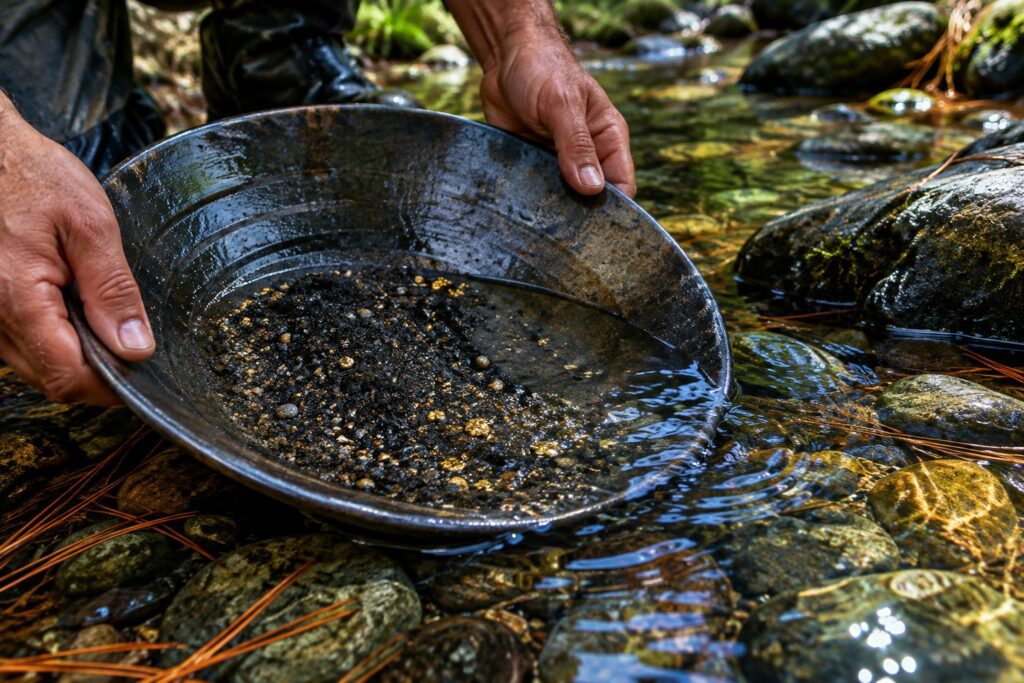
On most national forest and BLM land, panning for gold and using a metal detector with hand tools is allowed without a permit, if no one has claimed the ground. On Arizona State Trust land, recreational mining and mineral collecting are prohibited. Always check with the local ranger district or BLM office first.
Checked · Edited by the It's Show Low Editorial Team · Sources · How we check
Read this first: the rules, fines, fees and hours on this page come from the sources linked next to them. We read those sources on October 22, 2026. This is not legal advice. They can change, so check the current rule with the town, county, park or agency named before you rely on it. Anything not shown here is not confirmed: ask that town or park.
Unconfirmed We have not confirmed these rules for the Apache-Sitgreaves National Forests, and no one has asked the ranger district yet. The Forest Service policy is national, the BLM pamphlet is a 2014 edition, and we found no White Mountain Apache Tribe rule on prospecting. Call the land manager before you go.
National Forests (Forest Service)
Forest Service policy says recreational rock and mineral collecting, gold panning and prospecting with a metal detector are allowed on most national forests, and that this low-impact, casual activity usually needs no authorization. Some wilderness areas are closed to gold panning and metal detecting, and some eastern forests require a letter of authorization for panning because of their soils. Metal detecting normally needs no Notice of Intent, but any prospecting that might disturb surface resources does. The policy describes metal detecting as digging small holes rarely more than six inches deep; if removing rock or gold would disturb the surface beyond a small shallow hole, a Notice of Intent may be required. Normally, any gold found can be removed and kept. Metal detectors may not be used in or around known or undiscovered archaeological or historic sites, and digging in prehistoric or historic remains is prohibited by federal regulation (36 CFR 261.9). Searching for artifacts needs a permit granted for scientific research only.
The policy is national. It does not name the Apache-Sitgreaves National Forests, and we did not find a forest-specific page for panning. Closures and rules for a ranger district can differ, so call the district office before you go.
Bureau of Land Management Land
The BLM’s Arizona rockhounding pamphlet says rocks, minerals and semiprecious gemstones may be collected on BLM land without charge or permit for personal use, not for sale or barter. In Arizona the personal-use limit is 25 pounds a day and 250 pounds a year. Collection is not allowed in developed recreation sites unless designated, no mechanized equipment or explosives may be used, and metal detectors are acceptable (except in the San Pedro Riparian National Conservation Area). The pamphlet is a 2014 edition posted in 2018; limits may have changed. It does not say how to handle gold panning specifically.
Mining Claims
Much mineralized ground has been claimed. Claimants may have the right to exclude others, and entering a claim without permission is trespass. The BLM tells visitors to check for claims before visiting a site; the Forest Service says records should be checked before prospecting. The Arizona Geological Survey’s mineral-rights page points to the BLM’s claim records.
Arizona State Trust Land
The Arizona Geological Survey says recreational mining or mineral collecting on State Trust land is prohibited. The BLM’s pamphlet says rockhounding and metal detecting are not allowed on Arizona State Trust Land, and that you need the State Land Department’s Recreational Use Permit just to camp, hike or travel on it. The permit’s terms say permit holders will not take rock, sand or gravel off State land. Trust land that is leased for mining or other uses is not open to recreational use.
Tribal and Private Land
The Fort Apache Indian Reservation is the White Mountain Apache Tribe’s land. Treat it as closed to prospecting, and see the Tribe’s own permits and rules. We did not find a Tribe page that addresses prospecting by name; this is our caution, not a quote of their rule. Private land needs the owner’s permission.
Where Hand Panning Is Documented in Arizona
Lynx Lake and Lynx Creek in the Prescott National Forest. A 2003 Arizona Capitol Times article quoted the state mining department saying no permits were needed and the area was open to panning and metal detectors. That article is old and the department did not say it for the White Mountains. A club member reports that only pans, picks, shovels and classifying screens are allowed there, with no sluices or dredges; that is not an official rule. Private claims exist upstream. The Arizona Department of Mines and Mineral Resources published Gold Panning in Arizona (1990), a beginner’s guide. We found no documented panning spot near Show Low.
Safety
The BLM says Arizona has thousands of abandoned mines with cave-ins, falling hazards and bad air, and that you should not enter abandoned mines under any circumstances. Theft or destruction of equipment or structures at abandoned mine sites is illegal. Report hazards to the Arizona State Mine Inspector at (602) 542-5971 (number from the BLM pamphlet; confirm before you call). Bring water, watch the monsoon forecast in canyons, and tell someone where you are going.
This page is general information, not legal advice. Rules change; confirm with the land manager.
Questions People Ask
Do I need a permit to pan for gold in a national forest?
Forest Service policy says low-impact, casual panning and metal detecting usually need no authorization on most national forests. Some wilderness areas are closed, and anything that disturbs the surface may need a Notice of Intent. Check with the local ranger district.
Can I pan for gold on Arizona State Trust land?
No. The Arizona Geological Survey says recreational mining or mineral collecting on State Trust land is prohibited.
How much rock can I collect on BLM land in Arizona?
The BLM pamphlet sets personal-use limits at 25 pounds a day and 250 pounds a year, with no sale or barter. Check whether the limits have changed.
Can I keep gold I find?
On a national forest, the Forest Service says any gold found can normally be removed and kept, unless removing it disturbs the surface beyond a small shallow hole. Claimed ground is off-limits.
Sources
- USDA Forest Service: Mineral, Rock Collecting, and Metal Detecting on the National Forests
- Bureau of Land Management: Rockhounding in Arizona (free collection limits)
- Arizona Geological Survey: Mineral rights
- Arizona State Land Department: State Land Recreational Use Group Permit
- Arizona Capitol Times (2003): Gold mining claims don't always pan out
Checked October 22, 2026 by It’s Show Low. Cite this page: It’s Show Low (itsshowlow.com), checked October 22, 2026. Free to quote with a link.