
 Skip to content
Part of Show Low History, our guide to the people and stories behind the White Mountains.
Show Low is named for a card game. The story goes that two ranch partners, Corydon Cooley and Marion Clark, played Seven-Up for hours with neither man pulling ahead, and settled it with one last call: whoever showed the lowest card would win. Cooley turned up the deuce of clubs, the lowest card in the deck, and won the ranch. The town grew up on that ranch, and its main street is still called Deuce of Clubs. The game is a legend, not a documented event, and the tellings disagree on the details. This page shows each version and says what is and is not confirmed.
Checked · Edited by the It's Show Low Editorial Team · Sources · How we check

Legend, not confirmed. The card game is the town’s best-loved story, but no record of the game itself has been found. Facts we could check are marked as checked. Everything else is labeled.
The Story as It Is Told
In the 1870s, in the pine country below the Mogollon Rim, Corydon Cooley and Marion Clark were partners in a ranch. People who tell the story say it was enormous, about 100,000 acres. Cooley had been an Army scout at nearby Fort Apache, and his ranch sold hay, corn and beef to the post.
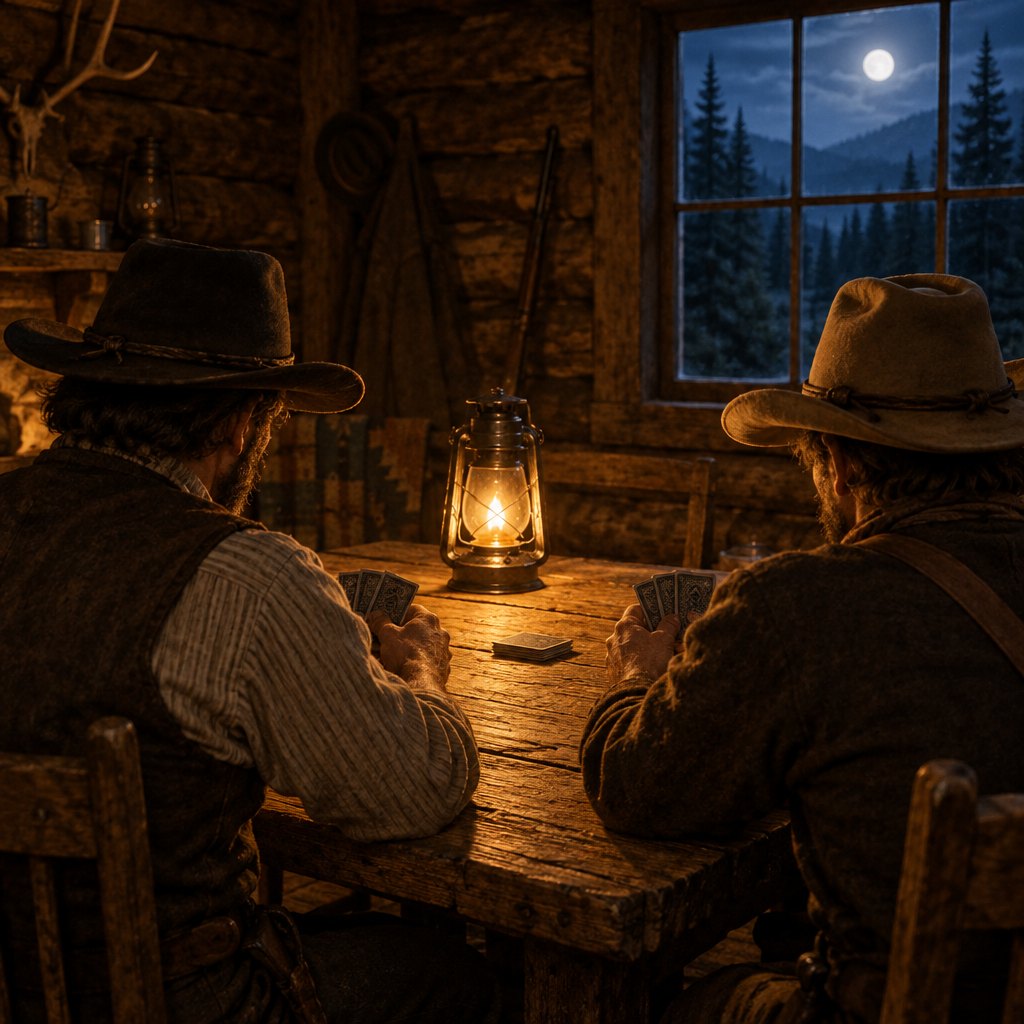
The trouble was simple. There was one ranch and two men, and the tellings say there was not enough room for both of them. So they agreed to settle it over cards: the winner kept the ranch and the loser left.
They played Seven-Up, and they played for a very long time. In the best-known tellings it was a marathon, hour after hour, some say all night, with no winner in sight.
Then, with the last hand dealt, Clark called it: “If you can show low, you win.” Cooley laid down the deuce of clubs, the lowest card there is, and answered, “Show low it is.” Cooley kept the ranch. Clark moved on up the creek. The ranch, and the town that grew around it, took the name Show Low.
That is the version most people know. Every sentence of it has been told a little differently by someone else, which is the first reason to treat it as a legend.
What “Show Low” Means in Seven-Up
Seven-Up is an old American trump game. Each hand, four points are up for grabs: High, Low, Jack and Game. Low goes to the player who holds the lowest trump card that was dealt. The two is the lowest card in the deck, so if you are holding it, nobody can beat you for that point. That is why a deuce of clubs, shown at the right moment, ends an argument.
This paragraph explains how the card game works. It is general knowledge about Seven-Up, not something the name sources say. They name Seven-Up and the deuce of clubs, and we found no source for a separate game called “Show Low.”
The Two Men
Five Versions of The Story
Historians agree on the name and the people. They do not agree on the game. Here is how the sources line up.
What Is Documented, and What Is Not
Where You See It Today
- Deuce of Clubs, the main street.The one street named for a winning card. A local figure, Emma Adams, is reported to have objected to naming more streets after poker hands, which is why it stands alone. See Deuce of Clubs and Downtown Show Low.
- The bronze card players.A statue of the two men at a card table stands at the Festival Marketplace on Deuce of Clubs. A reported earlier plexiglass display was damaged in 2014 and replaced; we could not confirm the installation date, and the museum catalog gives a different one. The statue’s photo is in copyright, so we do not show it here.
- The town logo.The City’s logo shows the deuce of clubs in a circle, and the slogan tells the story in six words.
- The museum.The Show Low Historical Society Museum covers the card game and the street-naming dispute. Its hours were not confirmed; call 928-532-7115. See Museums.
- The community center.The City’s Turn of a Card Community Center carries the same phrase. See Parks and Pool.
More Show Low Stories
Questions People Ask
How did Show Low get its name?
From a card game, according to local legend. Ranch partners Corydon Cooley and Marion Clark are said to have played Seven-Up for the ranch, and Cooley won by showing the deuce of clubs, the lowest card, when Clark said whoever showed low would win.
What card won the game that named Show Low?
The deuce of clubs, in most tellings. Arizona Highways notes that there is no record of which card Cooley actually played, so the card is part of the legend.
Is the Show Low card game story true?
Nobody can prove it. The town name and the Deuce of Clubs street are real. The game is a legend repeated by historians and the City, and sources disagree on the date, the opponent and the game itself.
How long did the Show Low card game last?
In the marathon version, hours, or all night, with no one pulling ahead until the last hand. The oldest tellings describe only the final hand, so the length is unconfirmed.
Is there a card game called Show Low?
The sources name Seven-Up, in which a player holding the lowest trump wins the “low” point. We found no source for a separate game by that name.
Where is the Show Low card game statue?
At the Festival Marketplace on Deuce of Clubs, downtown. Details are on our Deuce of Clubs page.
Sources
- True West: What’s the story behind the naming of Show Low?
- Arizona Highways, July 1996: Cooley, His Life and Times
- Wikipedia: Show Low, Arizona
- Route Fifty: The Poetry of Small-Town Mythologies in Arizona
- FamilySearch memory: Show Low Arizona History (a family-compiled account, used only for the detail marked as reported)
- City of Show Low: History
- Arizona Memory Project: Show Low Historical Society Museum item
- Navajo County Historical Society: Timeline
Researched October 26, 2026 by It’s Show Low. Cite this page: It’s Show Low (itsshowlow.com), checked October 26, 2026. Free to quote with a link.